
Inside Defense | Nick Wilson
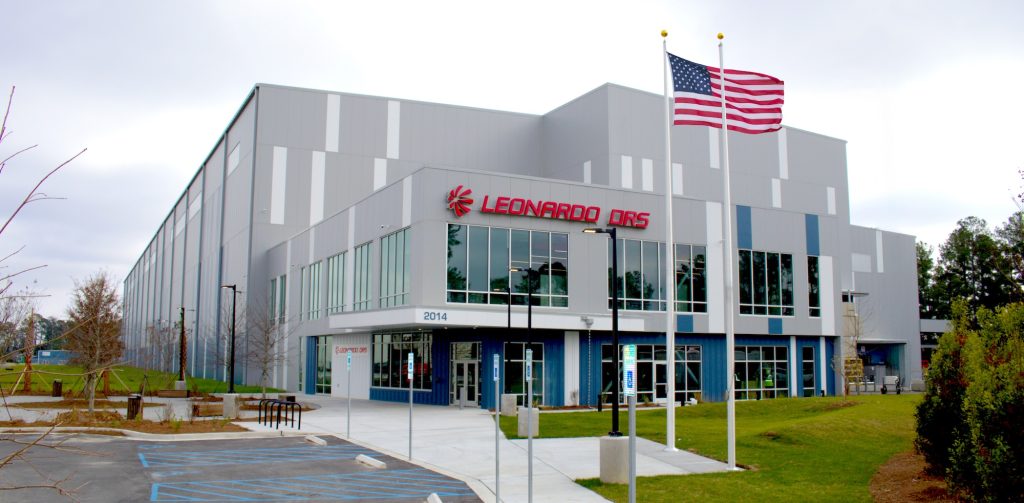
Defense firm Leonardo DRS is poised to cut the ribbon on a new $120 million facility in South Carolina that will soon begin assembling propulsion equipment for the Columbia-class submarine program in a bid to add highly sought-after capacity to the pained submarine industrial base.
The company is the sole producer of electric drive propulsion system components for the Columbia program, which it builds primarily in facilities on the East Coast. Now, it plans to use a new South Carolina facility to assemble these components into main propulsion electric motors rather than outsourcing the task, President and CEO John Baylouny told Inside Defense.
“We’re able to now kind of cut some of our suppliers and do a lot more work ourselves and be more efficient at it. So, it’s really about capacity and efficiency,” Baylouny said, pointing to the Navy’s heightened submarine demand, which calls for the delivery of one Columbia- and two or more Virginia-class boats on an annual basis.
Leonardo decided to establish this operation in Goose Creek, SC, because of its proximity to a network of intercoastal waterways that can be used to barge completed Columbia components to General Dynamics Electric Boat and HII facilities for final assembly, Baylouny said, and because the shipbuilding labor pool on the East Coast is already overtaxed.
The company, which derives about 10% of its total business from the Columbia program, is part of a submarine industrial base struggling against labor shortages and supply chain kinks as well as budgetary uncertainty. Columbia production is running 12 to 18 months behind schedule while the Virginia program faces delays of 24 months or more, according to Navy estimates.
Last February, Leonardo’s facility received a $45 million Navy submarine industrial base investment which came in the form of contract awards from HII. The facility is located immediately adjacent to HII’s Newport News Shipbuilding-Charleston Operations, which was acquired last year to build submarine modules and aircraft carrier structural units.
Leonardo’s 140,000-square-foot facility was built from the ground up over the past two years and will employ an initial workforce of 50 to 100 skilled trade workers. Eventually, it could expand to roughly 500 employees, Baylouny said.
Beyond propulsion system assembly, the facility sets Leonardo up to become a second source of steam turbine generators for the Columbia program — currently built only by Northrop Grumman — through a phased process that will start with testing work before beginning new construction.
“The submarine industrial base really only has one company that does steam turbine generators,” Baylouny said. “So, we said, ‘Hey, why don’t we set up and see if we can do that and help the Navy build the capability to test them first, and then we’ll design steam turbine generators and be a second source.’”
Navy officials and lawmakers have previously blamed late deliveries of these turbine generators for slowing Columbia production. Executives from submarine-builder General Dynamics have also credited late component deliveries with disrupting production cadence without naming specific components.
Steam turbine generators produce electricity using steam created by the immense heat generated by a submarine’s nuclear reactor. Before installation, the generators must be tested using massive amounts of steam, meaning Leonardo must install boilers in the new facility to produce the required steam output for testing.
Baylouny, who assumed the role of CEO earlier this month, also said the Trump administration’s emphasis on shipbuilding and its approach to the defense industry at large is “exactly what needs to be done.”
Following a series of statements from President Trump criticizing defense companies like RTX for allegedly failing to invest in productivity improvements while issuing dividends and stock buybacks, Baylouny said the president’s critique of industry is correct.
Leonardo DRS increased its own internal investment by 40% over the past three years and is now at about the right level, according to Baylouny, who said the company’s business growth incentives are closely aligned with the customer’s success.
“DRS has put a significant portion of its free cash flow into rebuilding capacity and expanding capacity and innovation. That’s our primary focus. Our primary focus is on growth, innovation, and, as I said, the customer’s outcome is of primary importance,” he said.
Baylouny declined to specify whether Leonardo will reevaluate its plans for dividends and share repurchases. The company reported spending approximately $24 million on stock buybacks while paying out $72 million in dividends during the first three quarters of its fiscal year 2025.
Meanwhile, as the Trump administration aims to expand the Navy’s fleet in part through new battleship and frigate programs, Leonardo DRS would like the sea service to establish a “common architecture” for ship propulsion systems that can be scaled from program to program.
“We believe that it makes sense for us to be doing one thing, one scalable architecture, and then apply it to different ship classes,” Baylouny continued, saying it is preferable that this next-generation architecture be fully electric like the Columbia program.
Though the Navy is not publicly pursuing this approach, Leonardo hopes to “guide the Navy down this path” as a means of reducing costs and improving efficiencies, Baylouny said.
“We’re investing in the infrastructure to build out the electric propulsion system at all different tiers, from the biggest motor to the smallest motor, from battleships to destroyers to frigates to unmanned surface vessels,” he said.