
Janes Defense | Michael Fabey
The USN call for modularity is being embraced by some involved in existing USN shipbuilding programmes.
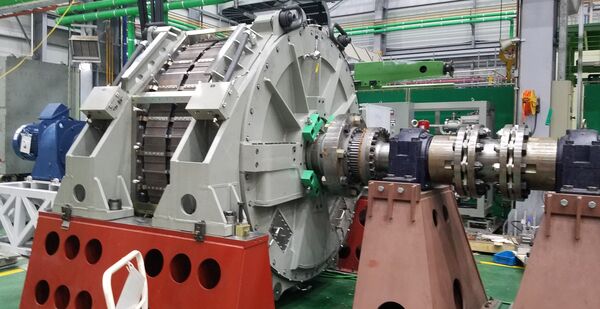
“The administration is going down the right path,” John Baylouny, CEO of Leonardo DRS, which is responsible for the Columbia-class submarine propulsion plant, told Janes on 12 January during an interview at the SNA symposium.
As the USN prepares to build its new unmanned surface vessels (USVs), frigates or even the proposed battleships, modularity could be key to acquiring more of those platforms quickly, according to Baylouny.
“What we want to see is a common architecture,” Baylouny said.
He cited the example of automobile production. “Everything is built off the same chassis. There should be unified architecture for these ships. You would then have flexibility to move around the power and even combat management. You can scale up and down depending on what kind of ship you want to build.”
He likened such a concept to that used for new SPY radars, which can be scaled up or down in size and power.
This would be a better approach than creating a new design for each new type of ship class and the necessary shipbuilding infrastructure for the different classes.
This would help create additional capacity, he contends.
Creating a common architecture also could enable the design of a ship to develop more integrated systems than federated ones aboard most vessels, he said, adding that could then make it possible for a ship to fuse sensor information at sea and provide that encompassing data or even help provide possible AI-developed solutions.
“We’ve been investing in the ability for a ship to ‘think’ for itself,” he said.
Key to that would be greater common-architecture power generation, such as that provided by electric drive as it provided on the Columbia-class submarines, according to Baylouny.
Ships with such power and integrated capability would be able to operate effectively farther down range and even when communications are disrupted, he said.
To operate the necessary AI data center, greater shipboard cooling systems would be required, he pointed out.
Leonardo DRS is developing a “rugged immersive cooling” system, with which the CPU is placed in a vat of oil to enable to “compute at the rate of speed,” he said.